

Depamu Mechanical Diaphragm Dosing Pumps in the Water Treatment Industry: Precision, Reliability, and Compliance
Introduction
Precise chemical dosing is not a peripheral concern in modern water and wastewater treatment; it is the operational foundation upon which treatment efficacy, regulatory compliance, and cost control rest. Whether the task is adjusting pH before discharge, precipitating phosphorus to meet nutrient limits, disinfecting effluent before release, or conditioning sludge for dewatering, the dosing pump determines whether the treatment process performs as designed—or fails quietly, one inaccurate stroke at a time. Among the technologies available for these duties, the mechanical diaphragm Metering Pump occupies a distinctive position: it combines the hermetic sealing and chemical compatibility of a diaphragm design with a mechanical drive that is simpler, more compact, and easier to maintain than hydraulic alternatives.
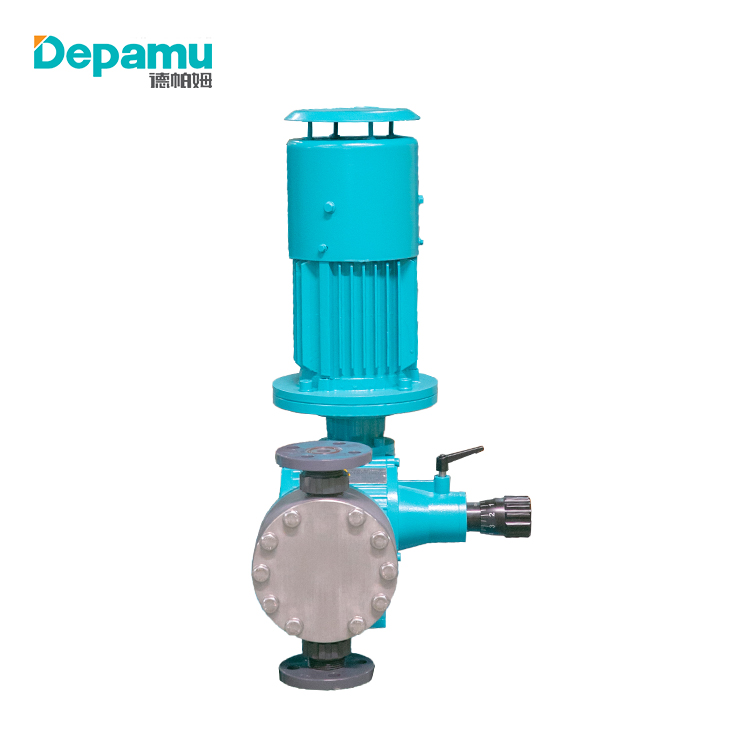
Depamu (Hangzhou) Pumps Technology Co., Ltd., founded in 2003 and headquartered in the Qiantang District of Hangzhou, China, has built a product portfolio that places Mechanical Diaphragm Metering Pumps at the center of its water treatment offering. The company’s DP Series and DPMFWSA Series are engineered specifically for the dosing duties that define municipal and industrial water treatment, and their CE certification provides independent verification that they meet European health, safety, and environmental requirements. This article examines the technical logic of Depamu’s mechanical Diaphragm Pumps, the specific demands of water treatment applications, and the practical considerations that determine whether a dosing installation delivers years of reliable service or becomes a chronic maintenance burden.
The Mechanical Diaphragm Principle and Depamu’s Design Approach
The operating principle of a mechanical diaphragm metering pump is straightforward but demands high precision in execution. A motor drives a worm gear pair, converting rotary motion into the reciprocating movement of a slide rod through an eccentric mechanism. The slide rod then drives the diaphragm through periodic deformation, creating the suction and discharge strokes that move the dosed chemical. Unlike hydraulic diaphragm pumps, which use hydraulic fluid to actuate the diaphragm, the mechanical design transmits force directly. This eliminates the hydraulic system—and its associated valves, bleed systems, and potential for fluid contamination—making the pump simpler in construction and more accessible for maintenance.
Depamu’s mechanical diaphragm pumps incorporate several design choices that address the specific vulnerabilities of dosing duty. The wetted end uses a double-diaphragm construction with PTFE as the process-facing material. PTFE provides broad chemical resistance across the aggressive substances common in water treatment—sodium hypochlorite, ferric chloride, polyaluminium chloride, sulfuric acid, and caustic soda among them—while the laminated diaphragm structure distributes stress more evenly to extend service life. A diaphragm condition monitoring system can signal damage before the process fluid reaches the drive mechanism, allowing the pump to continue operating safely until maintenance can be scheduled or to be stopped without contaminating the metered medium.
The fluid end replaces the dynamic seal of a plunger pump with the static seal of the diaphragm, eliminating the leakage path that plunger designs inherently possess. Check valves are designed with a self-cleaning structure, a feature that matters disproportionately when dosing fluids prone to crystallization, sedimentation, or gelling. Flow adjustment is available through a manual stroke-adjustment mechanism that operates in both static and dynamic states, allowing operators to change the dose rate without interrupting the process. Electric and variable-frequency stroke adjustment options are also available for applications requiring automated control.
Meeting the Chemical and Hydraulic Demands of Water Treatment
Water treatment dosing is not a single application but a family of duties with sharply different chemical, hydraulic, and control requirements. Depamu’s product architecture reflects this reality by offering two mechanical diaphragm series with overlapping but distinct capabilities.
The DP Series is oriented toward higher-capacity duties. It delivers flow rates up to 2,300 L/h per head against discharge pressures up to 1.2 MPa, with a turndown ratio of 10:1 and steady-state accuracy of ±2%. These specifications suit large municipal wastewater plants where chemical feed rates may reach several hundred to several thousand liters per hour, and where the pump must track diurnal flow variations without losing proportional dosing accuracy. The adjustable eccentric mechanism produces smooth, low-pulsation flow, a characteristic that is particularly valuable when dosing high-viscosity polyelectrolytes for flocculation: pulsation spikes can shear polymer chains and degrade floc formation, while the self-cleaning check valve reduces the risk of fouling from gel-like deposits.
The DPMFWSA Series addresses lower-flow duties where precision and installation flexibility matter more than maximum capacity. It delivers up to 150 L/h at 1.2 MPa with the same ±2% steady-state accuracy and 10:1 turndown ratio. Its cast aluminum housing provides effective heat dissipation and a lighter installed weight, with a plastic-sprayed surface that resists the corrosive atmosphere of a chemical dosing room. The pump can be installed above a solution tank, which simplifies piping and improves safety when handling hazardous chemicals. Wetted parts are available in 304, 316, and 316L stainless steel, PVC, PVDF, PP, and PTFE, allowing material selection to match the specific chemical being dosed—a critical consideration given that sodium hypochlorite, for example, off-gasses and can cause vapor locking in poorly specified diaphragm pumps, while ferric chloride demands corrosion-resistant metallurgy or polymer wetted paths.
Applications Across the Treatment Train
The practical value of Depamu’s mechanical diaphragm pumps becomes clearest when mapped onto the unit processes of a water treatment plant. In pH correction, the pump must deliver precise volumes of acid or alkali to hold effluent within regulatory limits; the ±2% steady-state accuracy directly reduces over-dosing, which saves chemical cost and avoids residual excursions into receiving waters. In phosphorus removal, metal salts such as polyaluminium chloride and ferric chloride must be dosed proportionally to influent flow. A 10:1 turndown ratio allows the pump to follow the diurnal flow pattern typical of municipal plants without sacrificing accuracy at the low end of the range.
Disinfection presents a different challenge. Sodium hypochlorite, calcium hypochlorite, and peracetic acid are corrosive and, in the case of hypochlorite, prone to off-gassing. The DPMFWSA Series, with its cast aluminum housing and wetted-material options including PVDF and PTFE, provides the chemical compatibility required for these duties. For plants that prefer a packaged solution rather than individual components, Depamu also supplies skid-mounted chemical dosing packages that integrate metering pumps, solution tanks, and control cabinets, with working and standby pumps available on the same skid to ensure uninterrupted dosing during maintenance—a non-negotiable requirement for facilities that must meet discharge permits every day of the year.
Selection, Installation, and Maintenance: Where Reliability Is Won or Lost
Mechanical diaphragm metering pumps have a reputation for low maintenance, but that reputation is conditional. Selection errors and installation shortcuts can turn a reliable pump into a recurring failure point. The first selection consideration is the chemical itself: material compatibility of the diaphragm, check valves, and wetted head must be verified against the concentration and temperature of the dosed fluid, and pumps handling hypochlorite require particular attention to venting and suction conditions to avoid vapor locking. The second is the hydraulic duty: discharge pressure, suction lift, and fluid viscosity must all fall within the pump’s rated envelope. Mechanical diaphragm pumps are generally suited to clear, stable chemicals and lower-to-moderate pressures; pushing a mechanical design beyond its pressure or viscosity envelope produces diaphragm failures not in years but in weeks.
Installation practices matter as much as selection. The pump should be mounted horizontally on a rigid base, with vibration-isolating pads recommended to prevent resonance and eccentric-mechanism wear. Flooded suction—installing the tank above the pump—is preferred for chemicals that off-gas, and the installation location should be ventilated, dry, and protected from direct sunlight and corrosive vapors. Depamu specifies maintenance intervals of up to 4,000 hours at pressures up to 1.0 MPa and up to 8,000 hours at pressures up to 0.7 MPa, with self-cleaning check valves extending service life in fouling-prone duties. These intervals are not merely suggestions: in plants dosing lower-quality sodium hypochlorite, overhaul frequency may need to increase well beyond the nominal schedule, and a preventative maintenance program that inspects diaphragm condition and check-valve function is essential to avoid unplanned downtime.
Conclusion
The water treatment industry’s requirements are converging on a set of demands that mechanical diaphragm metering pumps are well positioned to meet: accurate and repeatable dosing across a wide turndown range, hermetic containment of aggressive chemicals, simple maintenance with minimal specialized tooling, and documented compliance with international safety standards. Depamu’s DP and DPMFWSA Series address these demands with a coherent design philosophy—direct mechanical actuation instead of hydraulic complexity, double PTFE diaphragms with condition monitoring, self-cleaning valves, and a material portfolio broad enough to match the chemical diversity of the treatment train. CE certification, alongside the company’s API, ISO 9001, ISO 14001, and ISO 45001 credentials, provides procurement teams and plant operators with independent assurance that the equipment has been assessed against recognized safety and quality benchmarks. As discharge standards tighten and water reuse expands, the margin for dosing error narrows. In that environment, the value of a dosing pump is measured not by its datasheet maximum but by its ability to deliver the same accurate stroke, day after day, with minimal intervention—a standard that Depamu’s mechanical diaphragm designs are built to meet.