

Depamu Mechanical Diaphragm Metering Pump Complying with CE: Dosing Pump in Water and Sewage Treatment Industry
1. Introduction
Precise chemical dosing is fundamental to modern water and wastewater treatment. Whether adjusting pH, removing phosphorus, disinfecting effluent, or conditioning sludge, the reliability of the dosing pump directly determines treatment effectiveness and operational cost. Mechanical Diaphragm Metering Pumps have become the preferred solution for these duties because they combine high metering accuracy with robust construction and low maintenance requirements.
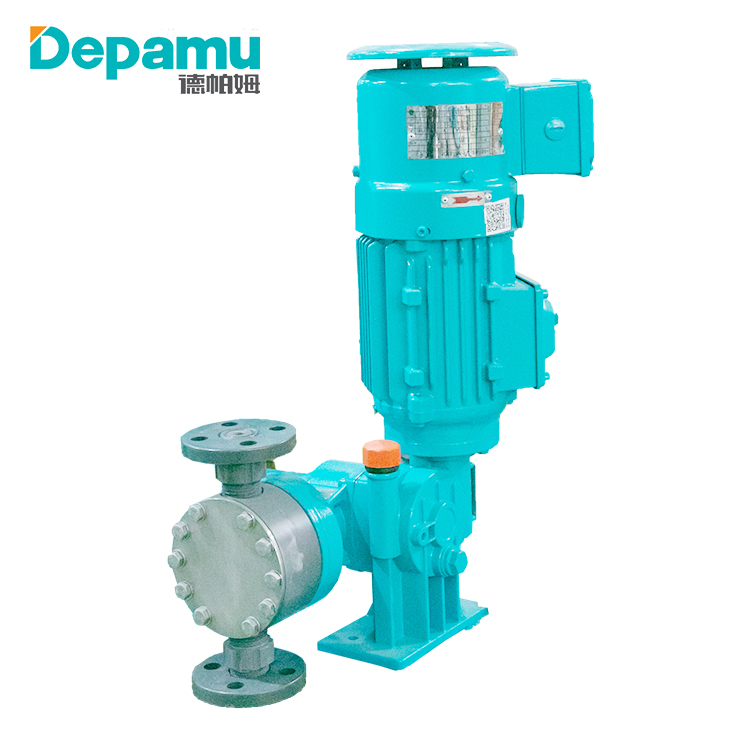
Depamu (Hangzhou) Pumps Technology Co., Ltd., established in 2003 and located in Hangzhou Qiantang Area, is a high-tech enterprise specializing in the research, development, production, and sales of metering pumps, including plunger type, mechanical diaphragm type, and hydraulic diaphragm type models. The company's mechanical diaphragm metering pumps, particularly the DP Series and DPMFWSA Series, are engineered to deliver precise, repeatable dosing in the demanding conditions typical of municipal and industrial water treatment facilities. Critically, these products hold CE certification, confirming their compliance with the European Union's rigorous health, safety, and environmental protection standards.
2. Understanding CE Certification for Metering Pumps
The CE mark is a mandatory conformity marking for products sold within the European Economic Area. For industrial pumps, CE certification primarily involves compliance with the Machinery Directive 2006/42/EC, which establishes essential health and safety requirements for machinery. The directive requires that machinery be designed and constructed to eliminate or reduce risks to operators, maintenance personnel, and the environment. For metering pumps, the harmonized standard EN 809 (Pumps and pump units for liquids — Common safety requirements) provides the technical framework for demonstrating compliance. Additionally, EN ISO 12100 (Safety of machinery — General principles for design) and the Low Voltage Directive 2014/35/EU, which covers electrical components, are typically applicable.
Depamu has passed CE certification alongside API, ISO 9001, ISO 14001, and ISO 45001 certifications, reflecting a comprehensive commitment to quality management, environmental responsibility, and occupational health and safety. The company adheres to API 674 and API 675 standards from the American Petroleum Institute, and its products have also obtained certifications from DNV and other international authorities.
For end users in the water and sewage treatment industry, CE certification provides concrete benefits. First, it ensures that the pump meets harmonized European safety standards, reducing liability risks for plant operators. Second, CE marking facilitates procurement in European markets and in countries that recognize European standards. Third, the certification process requires documented risk assessment, traceable manufacturing quality, and verified performance data — all of which provide assurance that the pump will perform reliably over its service life. For municipal utilities and engineering firms specifying equipment for international projects, CE certification is often a mandatory technical requirement.
3. Mechanical Diaphragm Metering Pump Technology
3.1 Working Principle
The mechanical diaphragm metering pump operates through a straightforward but highly precise mechanism. A motor drives a worm gear pair, which converts the rotary motion of the motor into reciprocating movement of a slide rod through an eccentric mechanism. The slide rod in turn drives the mechanical diaphragm through cyclical deformation, achieving fluid suction and discharge.
This design offers several inherent advantages for water treatment applications. Because the diaphragm isolates the pumped fluid from the drive mechanism, only the pump head and diaphragm come into contact with the chemicals being handled, protecting drive components from corrosion. The mechanically driven PTFE diaphragm requires no backing plate on the feed side, enabling smooth material delivery and safe operation.
3.2 DP Series: High-Capacity Performance
The DP Series is Depamu's high-capacity mechanical diaphragm metering pump, designed for demanding industrial environments. Key performance parameters include a maximum flow rate per head of 2,300 L/h and a maximum discharge pressure of 1.2 MPa. The pump accommodates fluid temperatures up to 40°C with PVC construction and up to 80°C with PTFE construction. The turndown ratio of 10:1 provides flexibility across varying dosing requirements, while the maximum suction head lift of 4 meters supports reliable priming in most installation configurations.
3.3 DPMFWSA Series: Compact Precision
The DPMFWSA Series is a more compact mechanical diaphragm metering pump designed for applications requiring precise, lower-flow dosing. This series delivers a maximum flow rate of 150 L/h per head with a maximum discharge pressure of 1.2 MPa, accommodating PVC temperatures up to 40°C and PTFE temperatures up to 80°C. The series also maintains a turndown ratio of 10:1 and a maximum suction head lift of 4 meters.
Both series benefit from the mechanical diaphragm's inherent seal-less design, which eliminates the dynamic seals found in plunger-type pumps. This eliminates the risk of leakage and reduces maintenance requirements, a critical consideration in water treatment facilities where chemical containment is both an operational and environmental priority.
4. Applications in Water and Sewage Treatment
4.1 Municipal Drinking Water Treatment
In drinking water treatment plants, Depamu pumps are used for precise chemical dosing across multiple process stages. Disinfection involves the accurate metering of chlorine and other disinfectants, where even minor deviations can compromise public health outcomes. Coagulant and flocculant dosing facilitates the removal of suspended solids during clarification. Additionally, pH correction through acid or alkali dosing ensures water chemistry remains within regulatory limits before distribution.
4.2 Industrial Water Treatment
Industrial facilities rely on Depamu pumps for a variety of water treatment applications. Boiler water treatment represents a particularly demanding application, where feedwater quality directly impacts the performance and longevity of steam-generation equipment. Depamu provides specialized solutions for this purpose, including phosphate injection systems to control scale formation, hydrazine injection systems for oxygen scavenging to prevent corrosion, and ammonia injection systems to regulate pH levels. These systems automatically adjust the dosing rate based on real-time feedback from parameters such as flow rate, pH, and dissolved oxygen.
Circulating water treatment addresses the challenges of cooling towers and closed-loop systems. Here, the primary concerns are scaling, corrosion, and biological fouling. Depamu systems are deployed to inject scale and corrosion inhibitors, as well as biocides, to protect heat exchange equipment and maintain thermal efficiency. The precise dosing of these chemicals is vital to prevent both under-treatment, which leads to fouling, and over-treatment, which wastes chemicals and can be environmentally harmful.
4.3 Wastewater and Sewage Treatment
Wastewater and sewage treatment represents a major area of application for Depamu dosing systems. In municipal and industrial wastewater treatment plants, Depamu systems are used for the dosing of flocculants and coagulants to facilitate the removal of suspended solids, as well as acids and alkalis for pH correction before discharge. The systems are designed to handle the variable chemical demands characteristic of wastewater treatment, where influent quality fluctuates significantly.
For phosphorus removal — a critical regulatory requirement in many jurisdictions — the precise metering capability of Depamu mechanical Diaphragm Pumps ensures that coagulants such as ferric chloride or aluminum sulfate are dosed at optimal rates. The ±0.5% metering accuracy achieved in the working range of Depamu metering pumps ensures that chemical consumption is optimized, reducing both operational costs and the risk of over-dosing.
4.4 Sludge Conditioning
Sludge conditioning prior to dewatering requires the accurate dosing of polymers and other conditioning agents. Depamu's progressive cavity and diaphragm pump solutions address this application, handling fluids with viscosities up to 2 million centipoise and slurries with solid content up to 60%. The mechanical diaphragm design is well-suited to this duty because it provides consistent volumetric displacement even when handling non-Newtonian fluids.
5. Operational Advantages in Water Treatment Applications
5.1 Metering Accuracy and Turndown Ratio
Metering accuracy is paramount in water treatment, where chemical under-dosing can result in regulatory non-compliance and over-dosing represents unnecessary cost and potential environmental harm. Depamu mechanical diaphragm metering pumps achieve a metering accuracy of ±0.5% in their working range, with a flow adjustment range of 10% to 100%. The 10:1 turndown ratio enables a single pump to handle varying dosing requirements across different operating conditions without the need for pump replacement or complex recirculation systems.
5.2 Corrosion Resistance and Chemical Compatibility
Water treatment chemicals range from relatively benign coagulants to aggressive acids, caustics, and oxidizers. Depamu addresses this challenge through careful material selection. Pump heads and wetted parts are available in PVC for temperatures up to 40°C and PTFE for temperatures up to 80°C, with the PTFE diaphragm providing excellent chemical resistance across a broad pH range. For the most corrosive chemical applications, Depamu offers PTFE double-diaphragm configurations that provide superior corrosion resistance and leak prevention.
5.3 Reliability and Maintenance
The mechanical diaphragm design eliminates the dynamic shaft seals found in plunger pumps, removing the primary wear component and leak path from the pump design. This translates directly to reduced maintenance requirements and lower lifecycle costs. The seal-less construction also means there are no packing glands to adjust or replace, simplifying maintenance procedures and reducing the potential for operator error.
6. Market Context and Industry Trends
The global dosing pump market was valued at approximately USD 4.53 billion in 2025 and is projected to reach USD 6.36 billion by 2031, representing a compound annual growth rate of 5.75% during the forecast period. The water and wastewater treatment segment represents one of the largest application areas within this market, driven by increasingly stringent environmental regulations, aging infrastructure requiring upgrades, and growing global demand for clean water.
Within this market, mechanical diaphragm metering pumps occupy a distinct position. They offer lower initial cost than hydraulic diaphragm pumps, particularly at higher flow rates, while providing excellent suction lift capabilities and ease of operation and start-up. For water treatment applications where discharge pressures are typically moderate, mechanical diaphragm pumps represent an optimal balance of performance, reliability, and cost-effectiveness.
7. Depamu's Engineering Capabilities
Depamu's engineering capabilities extend beyond individual pump design to encompass complete dosing system integration. The company's DPJY-series Injection Packages are complete, skid-mounted systems that integrate chemical dissolving, preparation, metering, and injection into a single, compact unit. This modular approach — often incorporating one tank with two pumps or two tanks with three pumps — offers a space-saving and easily transportable solution that can be tailored to specific dosing room requirements.
The components, from the solution tank to the wetted parts of the pump, can be manufactured from a variety of materials to match the specific chemical being handled. Options include 304 and 316 stainless steel for corrosion resistance, carbon steel with rubber lining, and various polymers including FRP, PE, and PVC. This ensures compatibility with a wide range of treatment chemicals, from aggressive acids and alkalis to high-purity amines and specialized polymers.
With over 4,000 specifications and models of metering pumps and chemical pumps, and more than 20 patents including five invention patents, Depamu has developed internationally leading diaphragm pump technologies that serve diverse industrial applications worldwide.
8. Conclusion
The combination of CE certification, proven mechanical diaphragm technology, and deep application expertise positions Depamu as a reliable partner for water and sewage treatment facilities worldwide. The CE mark provides assurance of compliance with European safety standards, facilitating procurement for international projects and reducing liability risks for plant operators. The mechanical diaphragm design delivers the metering accuracy, chemical compatibility, and maintenance simplicity required for demanding water treatment applications. As global demand for water treatment solutions continues to grow — driven by tightening environmental regulations and the need for sustainable water management — mechanically actuated diaphragm metering pumps will remain a cornerstone technology, and Depamu's CE-compliant product range is well-positioned to serve this expanding market.